
“O Well of the Strand of the Two Women, beautiful are thy cresses, luxuriant, branching; since thy produce is neglected on thee thy brooklime is not suffered to grow. Forth from thy banks thy trout are to be seen, thy wild swine in the wilderness; the deer of thy fair hunting crag-land, thy dappled and red-chested fawns! Thy mast all hanging on the branches of the trees; thy fish in estuaries of the rivers; lovely the colours of thy purling streams, O thou that art azure-hued, and again green with reflections of surrounding copse-wood.”
Standish O’ Grady translation, The Colloquy With the Ancients, 12 to 14th century
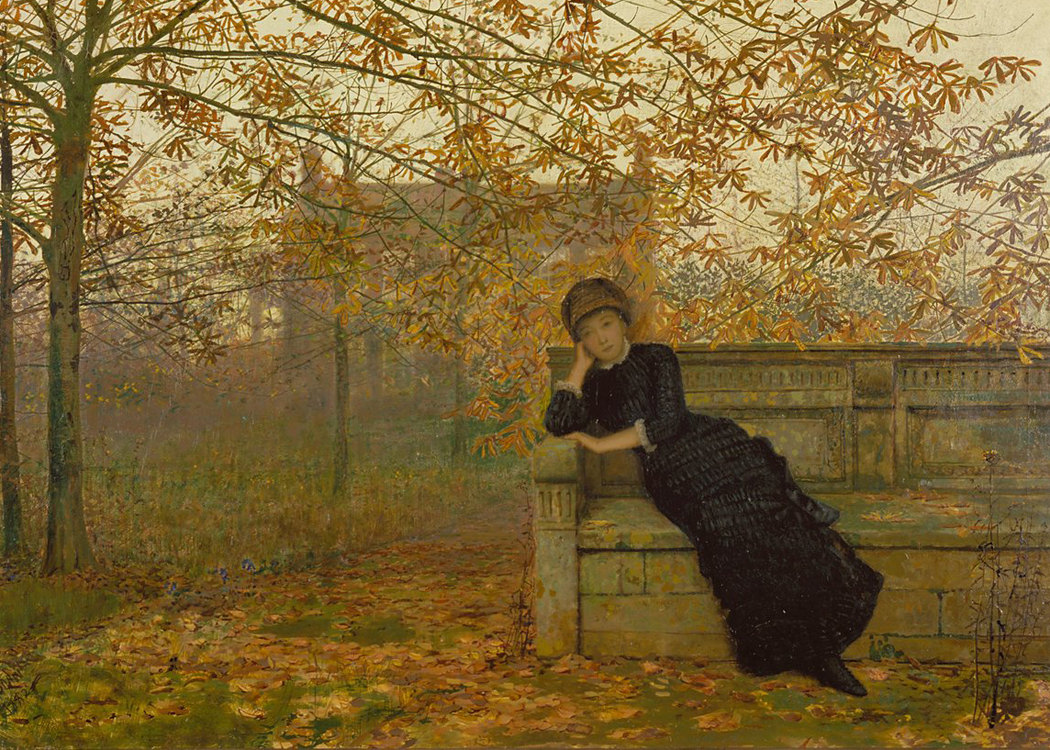
Cover art by John Atkinson Grimshaw
Brooklime or Veronica beccabunga is also called water pimpernel, becky leaves, germander speedwell, European speedwell or limewort. Brooklime was called lothar, lothal or biolair-Mhoire in Gaeilge and lochall in Scots Gaelic. The name Veronica has an unknown European origin while the Danish name beccabunga means ‘brook bunch’. The common name Brooklime simply refers to the way in which the plant frequently occurs not only along brooks or streams but in heavy lime environments. Brooklime can be easily overlooked but once I’ve focused on it, it’s hard to take my eyes off the stunning blue flowers. The rounded, subtly serrated leaves are pleasing as well and the plant just feels healing.

Dioscorides mentioned brooklime as being used to treat kidney stones and bladder complaints, to cure dysentery, and as a diuretic or abortifacient. In Ireland, it was used to treat colds, cough,1 tuberculosis,2 kidney complaints, scurvy,3 wounds, eye complaints, poisoning,4 stomach complaints,5 jaundice,6 as well as used as a blood tonic or to ease labor pains.7 John K’Eogh echoed Dioscorides’s medicinal recommendations and mentioned the plant was so well known in Ireland that he need not describe it.8 It was used for colds on the Isle of Mann and ‘bad legs’, wounds and eye complaints in England.9 A tea was made and drunk to treat gout and rheumatic complaints in Scotland.10 In Wales, it was recommended to treat stomach complaints and wounds.11
Another closely similar medicinal species, enough so to be confused for the same plant, was Speedwell or Veronica offiinalis. In Ireland, it was said in the Folk Duchas that “The old herbalists knew all about these plants. There were some plants that were used by witches to save people from the good people or to keep their butter or perhaps take it away. One of these is the Treón lus or strong herb found in lakes and also the speedwell.”12 Speedwell was according to Lady Wilde one of “… seven herbs that nothing natural or supernatural can injure… but they must be pulled at noon on a bright day, near the full of the moon, to have full power.”13
Brooklime and watercress were often foraged side by side as well as mentioned in connection with the other. For example, in the Irish Colloquy With the Ancients, a certain sacred well was praised for producing large amounts of both brookime and watercress. In the tale, after the hero Caeilte gave Ossian three kisses, Ossian placed a handful of watercress and brooklime in his friend’s hand. Caeilte’s eloquently responded, “…by my word never was my portion in hand of woman or of man that I would prefer before thee.”14 In the Irish tale of Buile Suibhne, brooklime was mentioned again in four different places of the text in conjunction with watercress and for example it was told that “…without the company of women; save brooklime of warrior-bands, a pure fresh meal, watercress is our desire.” It was also said in the Irish Brehon Laws where a multitude of various classes of poets are described, that a ‘fochloe’ poet was of similar nature as a fresh sprig of the brooklime plant and interpreted as being without expansion on his art at the moment due to his youth.15

Brooklime and Speedwell are in the Plantaginaceae family and native to Europe, Asia and North Africa but have become naturalized in North America which also has many closely related native species used for similar medicinal purposes. Both Brooklime and Speedwell have small, smooth oval leaves with blue to purple flowers. They typically bloom from mid summer through to autumn and may have been associated with the Summer Solstice or Lughnasadh. They’re perennials hardy in zones 3 through 8, grow up to 90 cm or 3 ft tall and do well in full to part sunlight and moist but well drained soil. Brooklime’s energy is hot and dry. The leaves and stems are edible and have a subtly bitter flavor. They’re most commonly used as an infusion, decoction and as a whole food.
Benefits
antilithic, antitussive, bitter, blood tonic, diuretic, eye tonic, kidney tonic, digestive tonic, vulnerary
Recipe
Brooklime Cough Infusion
Ingredients: 1 tbsp. brooklime, 1 tsp. marshmallow, 1 tsp. mullein, 1 tbsp. molasses
Instructions: Boil 16 oz. of water, remove from heat and add your herbs. Let it simmer for 10 to 20 minutes. Strain, stir in molasses and sip throughout the day.
References
- Irish Folk Duchas, School Collection – Volume 662, Page 098
- Irish Folk Duchas, School Collection – Volume 667, Page 059
- Irish Folk Duchas, School Collection – Volume 687, Page 013
- O’ Cuinn, Tadhg, Irish Materia Medica, Ireland, 1415, pg. 560 and 562.
- Irish Folk Duchas, School Collection – Volume 540, Page 063
- Irish Folk Duchas, School Collection – Volume 993, Page 132
- Chonchubhair, Máirín Uí, Flóra Chorca Dhuibhne : aspects of the flora of Corca Dhuibhne, Baile an Fheirtéaraigh: Oidhreacht Chorca Dhuibhne, 1995, pg. 196.
- K’ Eogh, John, Botanologia Universalis Hibernica, or An Irish Herbal, Cork, 1735, edited by Michael Scott, 1986, pg. 34.
- Allen, David and Hatfield, Gabrielle, Medicinal Plants in Folk Tradition: An Ethnobotany of Britain & Ireland, Timber Press, 2004, pg. 260.
- Gardiner, William, The Flora of Forfarshire, Edinburgh, Longman, 1848, pg. 136.
- Allen, David and Hatfield, Gabrielle, Medicinal Plants in Folk Tradition: An Ethnobotany of Britain & Ireland, Timber Press, 2004, pg. 260.
- Irish Folk Duchas, School Collection – Volume 622, Page 560
- Wilde, Lady, Ancient Legends of Ireland, London, Chatto & Windus, 1911, pg. 184.
- Myddvai, Meddygon, Pughe, John and Williams, John, The Physicians of Myddvai, Wales, 1861.
- O’ Grady, Standish, The Colloquy With the Ancients, Medieval Irish Series, Cambridge, Ontario, 1999, pg. 4 and 66.
- MacFirbis, Duald, O’ Curry, Eugene and O’ Donovan John, Brehon Law of Tracts, Vol. 4., Dublin, Thom & Co., 1879, pg. 361.

Isla Skye / The Druid's Cauldron Historical Society
Isla Skye is a writer, photographer, herbalist and teacher of 20 years who lives in Mayo, Ireland.
We are a registered non-profit, The Druid’s Cauldron Inc. 501(c)(3) The Druid’s Cauldron is an independent journal established in 2016, dedicated to the preservation and exploration of the druids, filid/poets, culture, native wisdom, and the living traditions of the isles. We exist to recover folklore, herbalism, spiritual philosophy, and ecological knowledge embedded in the whispers of our ancestors.
Through deep research into traditional folklore, herbalism and mythology as well as personal artistic endeavors, we seek to cultivate a deeper relationship with the land, the seasons, and to one another. We are committed to serious inquiry and evidence-based information, or it is alluded that it’s personal philosophy and labeled as such. The Druid’s Cauldron is a space for the curious, the contemplative, and those who feel called to remember older ways of being in right relationship with the land and each other.
Leave a Reply