The Groac’h of the Isle of Lok
From the Lilac Fairy Book by Andrew Lang, 1844 – 1912. Cover art is ‘Rocks in Brittany’ by Henri Alexandre…


••• The Druid’s Cauldron Historical Society ••• Dedicated to the exploration of the Druids and Poets
“Let me blow the dust off you, resurrect your breath.” Lola Ridge, Irish anarchist, 1873 – 1941
From the Lilac Fairy Book by Andrew Lang, 1844 – 1912. Cover art is ‘Rocks in Brittany’ by Henri Alexandre…
Originally collected by John Francis Campbell, in 1859 from a fisherman near Inverary and included in his book Popular Tales…
“Men build too many walls and not enough bridges.” Joseph Fort Newton Cover art by Aert van der Neer A…

“Mystical experiences do not necessarily supply new ideas to the mind, rather, they transform what one believes into what one…

The twelfth episode of the 32 Ingredients podcast is now live! The Irish Wolfhound is a living breathing icon of…

Cover art and all art by Carl Gustaf Hellqvist One oft-touted piece of meditation advice is to notice your thoughts…

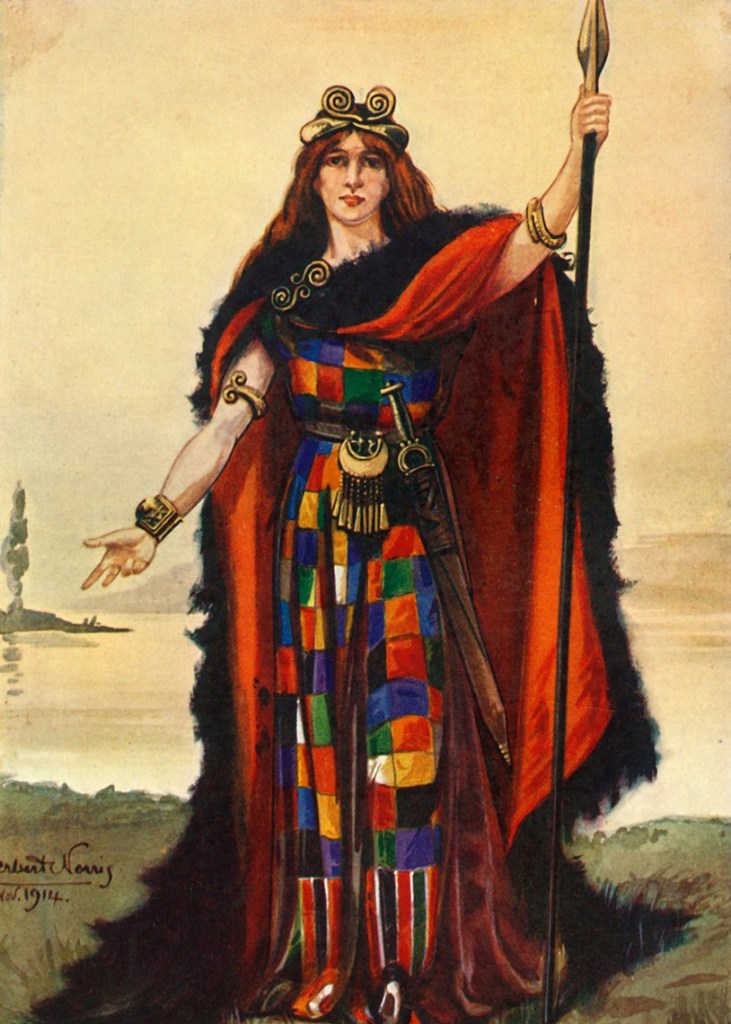
“A great obnubilation was conjured up for the bard so that he slept a heavy sleep, and things magic-begotten were shewn to him to enunciate, apparently in his sleep. This was called “illumination by rhymes,” and a similar method was used in Wales. When consulted, the seer roared violently until he was beside himself, and out of his ravings the desired information was gathered. When aroused from this ecstatic condition, he had no remembrance of what he had uttered. Giraldus reports this, and thinks, with the modern spiritualist, that the utterance was caused by spirits.” – J.A. MacCulloch (Art by Herbert Norris)

“Becoming a Druid is a life-long task. Indeed, many say that the work of being a Druid is a constant process of becoming, of reaching the archetype of strength, wisdom, clarity, invulnerability, and gentle humanity, together with an understanding of nature at its rawest edges. We stretch through our souls the essence of life, to the spirit that vitalizes, to the gods that empower us, in search of inspiration.” – Emma Restall Orr (Art is A print from La France et les Francais a Travers les Siecles, Volume I, F Roy editor, Saint-Antoine, 1882-1884)
“Members of the learned caste or priestly profession in Celtic and early Irish culture. The word ‘druid’ is probably derived form the Celtic dru-wid, which would have meant ‘very knowledgeable’. The Greek and Latin writers attest to the importance of the druids among the Celtic Gauls. They were at the centre of society, making decisions on matters of tradition, custom and law and also on general questions concerning nature and human life.” – Dáithí Ó hÓgáin (Art is ‘The Bard’ by Thomas Jones)