
“Theyre verses are usually songe at all feasts and meetings,
by certayne other persons, whose proper function that is…”
Edmund Spencer – 1552-1599 CE
“Fonnsheen,” Dalriada Celtic Heritage society, F. Tulis
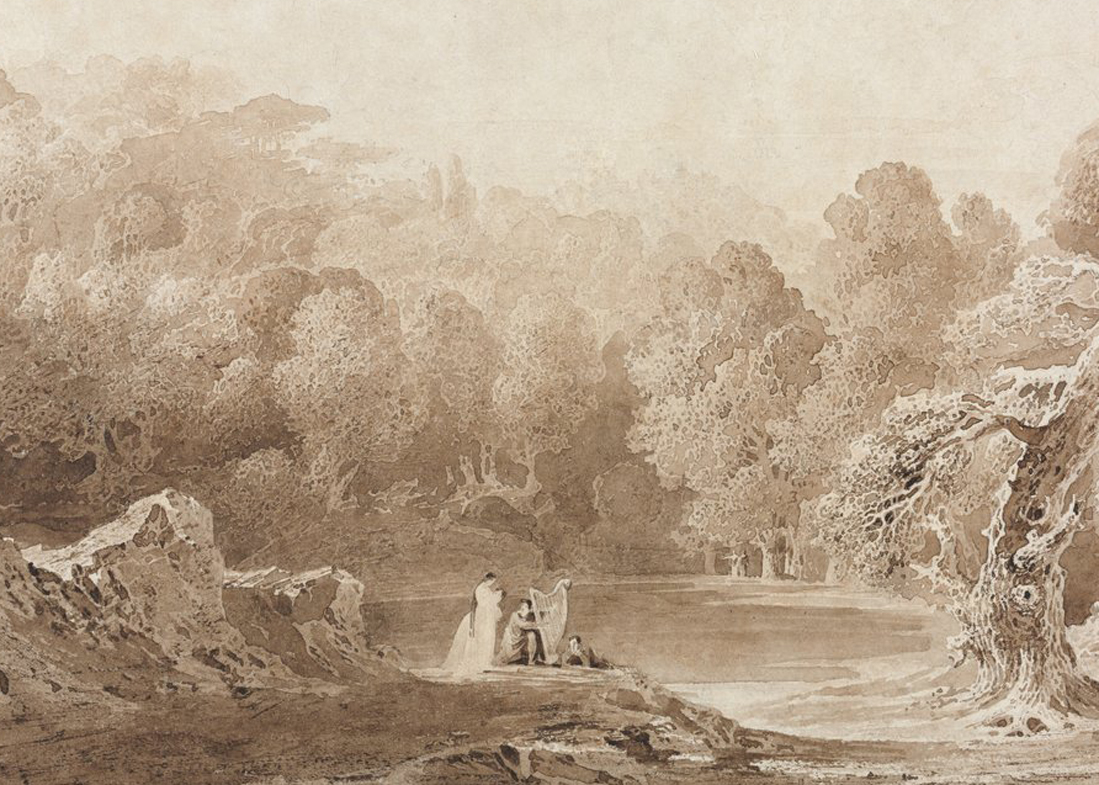
Cover art by John Martin
As we previously discussed, music was an integral part of the Filidh’s poetic recital. Specifically, the music of the harp that accompanied the Filidecht of the Poets was accorded a special status. It was held apart from the common songs used for partying and merriment, and was given a place of highly sought honor. Such music was called ‘Fonnsheen,’ (‘True Music’ or the music of the Sídhe). Such music frequently comes from the lands of the Ever-living and is said to herald the opening of the doorways between worlds. In truth, this music is a natural harmony, which can be heard by a trained ear or a poetic heart. To the ancient Celts, music was to be found within each part of the natural ‘Green World’ as well as the bright feasting halls of the Sídhe. The Dagda, being the God of the Druids, was the guardian of this secret music. Due to its ability to connect the unspoken wonders of the Otherworld to the forms and images created by the poet’s chanting, the harp has sometimes been called ‘the bridge between Heaven and Earth.’ It was the Dagda’s harp that opened the ways, controlling the seasons, and stopping the flow of time itself.
Subscribe to get access: $5 a month

Searles O'Dubhain
Searles O’Dubhain is an American Celtic scholar, writer and story teller who has been practicing Druidry for over 30 years. Searles created ‘The Summerlands’, one of the very first beloved online Celtic pagan communities in the early 90’s. He additionally published ‘Ogham Divination’, that lays a detailed and creative pathway of recreating and discovering the ancient ways of the Druids. This and much more available on his website.
Leave a Reply