
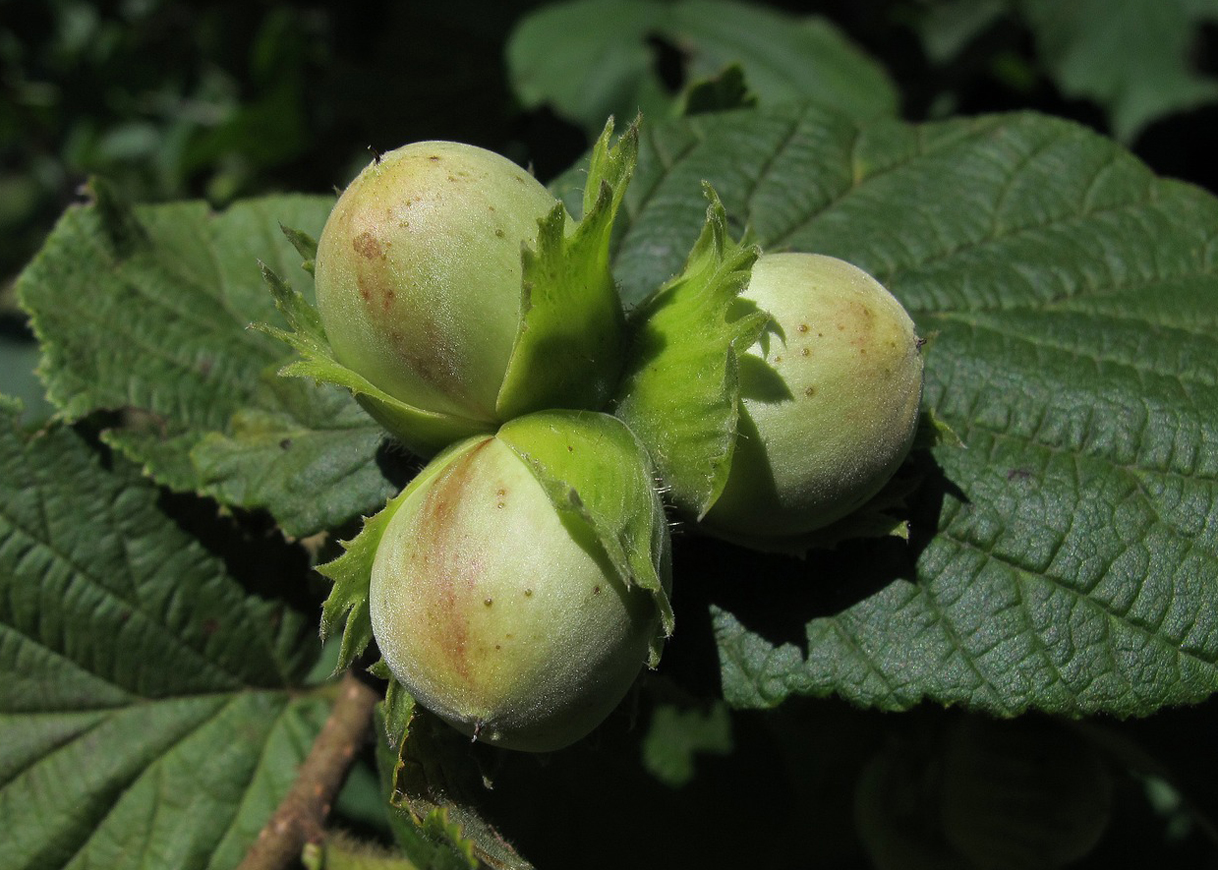
“I went out to the hazel wood, Because a fire was in my head, And cut and peeled a hazel wand, And hooked a berry to a thread.”
W.B. Yeats
One possible arrangement of these qualities and associated worlds-gods-strains is given below. The groupings are: Cauldron (Quality) – Harp Strain (Music). Each grouping is also associated with specific deities.
Coire Goriath (Sustenance / Warming) – The Sleeping Strain The Dagda / Iuchar – salmon, the spawn of salmon
- Sall – dirt; a prop? a post or beam? sallow? a willow? – Poetry (éigse; filíocht, Stone- Banba / Cailleach)
- Fall – satire; an enclosure; a ring; a circuit; a spot – Reflection (machnamh; meabhrú, Land-Áine)
- Fuball – (fafall) filth?, (fáball) a moving land?, a course?, a decision – Meditation (léirsmaoineamh, Life- An Dagda) Coire Soís (Wisdom / Áiged-Celebration) – The Laughing Strain
Lugh / Brian – speech; brightness, etc.
- Finnam – bright song / time? – Great Knowledge (eolas; fios; láis, rús, Sun-Ogma)
- Fonnam – foundation song / time? ground song / time? – Lore (fiannaiocht, eolas?, Stars- Fintan)
- Fofuigell – (under? in the process of?) speech; discourse; a judgement – Inquiry (taighde, fochmarc, Sky-Lugh)
Coire Érma (Motion / Vocation) – The Wailing Strain
Ogma / Iucharba – the death of the salmon? an enclosure of redness? the act of procreating?
- Crú – blood; inheritance, (cró) enclosure – Intelligence (gaois; eigna; éirim, Sea – The Morrígan)
- Crínam – withered; decayed; old time? – Wisdom (críonnacht, Wind-Brighid)
- Cruanbla. – a crimson plain / lawn / field – Understanding (céadfa; meabhair, Moon- Bóann)
The Cauldron of Warming is also a Cauldron of Sustaining. In this role it is also the Cauldron of Rebirth and the Undry Cauldron of The Dagda that satisfies our every need. In this renewal of the body during life, it is very much like sleep, which is when we are renewed. Its phases are meditation, reflection and poetry, which is a source of renewal and continuing life for the traditions of our people and our selves.
The joys of imbas are ours when we have filled our Cauldron of Wisdom. This means that we have gone beyond the limitations of the world and that we have experienced the profound happiness of spiritual ecstasy. Our awareness has expanded to include all worlds and all knowledge. In the moment of our initiation or integration into the wisdom of imbas we are more than we are. We are the tribal knowledge. We are a being of many skills. We are the Sun arising in the West and the ancient hidden mysteries of the Stars.
The Wailing Strain and the Cauldron of Vocation have much in common as they both deal with the life of the world on a day to day basis. It is in our daily work that we encounter our victories and our defeats. This is where we do our battles and we make our marks. Ogma, the champion of the gods, is the deity I most closely associate with this effort. The battle of the salmon to return to its source for mating and renewal also closely describes the struggle and the strain of life to continue. In our struggles we may accumulate wisdom, as does the Salmon of Wisdom at the Well of Segais.

Seven B’s on Birch
I can frame what no tongue utters…
Taliesin – Cad Goddeu, 6th century C.E., Wales
It is a known fact that the Irish Filidh (Poets/Bards/ seers) had to learn tables of Ogham (150 or so) in their twelve year study. They also learned the secret language of poets (which I believe to be based on the original Ogham sounds and hand symbols). As mentioned previously, the Ogham were used as memory aids in retaining and accessing knowledge by the Druids. Each list element (whether tree, color, bird, tone, or other) was associated with the beginning sound of its corresponding Ogham. “Beith” or “birch” was associated with the Ogham “B,” for instance (it is the first Ogham). The very first use of Ogham was the carving of seven “B’s” on a stave of Birch, which was given to Lugh as a warning.
The kenning or meaning of this message was that he should beware; seven attempts would be made to spirit his wife away into the Underworld. It is difficult for the uninitiated to understand how seven “B’s” carved on a stave of wood could possibly have such a meaning, but such is the nature of Ogham and it’s use as a key to Druidic memory. In the dindshenchas, one of Lugh’s wives was named Buí of the Seven Youthful Periods (she is also known as the Cailleach Bheara, who would age into a Hag and then be restored to youth again). It was frequently the Birch that was the first tree to regrow within a devastated forest, following forest fires and even the destructions of the Ice Ages. The Birch Ogham is frequently assigned the meaning of “new beginnings.” Combining all of these apparently unrelated facts with the custom of using birch in burials, gives us insight into the Ogham kenning, “Beware; seven attempts will be made to spirit your wife away into the Underworld!” Lugh can be interpreted to be the Light that separates the Day from the Darkness. Buí, which in Irish means yellow, can represent the youth of each day as it comes to us with every dawning. It is Light that rescues Day from Darkness and gives us renewal and new Life. Buí was spirited away each Night to the Underworld but she returns to us seven times because Lugh has rescued her. Ogham is the power of the mind to connect lore and symbolism in a living, breathing cascade of image and song. Seven “B’s” were carved on a stave of Birch as the first use of Ogham.
Odóireacht na Fedha (Carving the Woods)
Since the actual performance of an Ogham Divination involves the casting of staves/fedha (or “FEW-eh” as it is pronounced) upon a casting cloth, a discussion of their acquisition, composition and construction is required. Not many commercially manufactured sets are available, though the set I use most often is available from the Druids of stone Dolmen (who are listed in the Bibliography). The fedha themselves should be about finger length in size and carved with symbols for each of the 25 Ogham. The Ogham symbols are normally carved along the edge of the flesc, but may also be carved on the flat surfaces or the ends. Some people prefer to work with the actual woods that are represented by each Tree Ogham symbol.
This is a difficult task to accomplish, since some of the trees do not grow widely outside of Europe. Some “Crane Bag” symbols are also not trees and will therefore have to be carved on some type of “neutral” wood, or some other substance (shells or rocks, for instance). My favorite set of Ogham fidh are made of “faerie wood” (bog oak from Ireland that has lain in the ground for some 6000 years). They are about a knuckle’s length, square, and flattened out (about a quarter inch thick), so that when they fall to the casting cloth, they are either upright or reversed (I make use of this feature of “uprightness” in my own divinations). To aid you in choosing woods for your own flesc, here are some of the trees that have been used to carve Ogham, along with their some of traditional uses:


Searles O'Dubhain
Searles O’Dubhain is an American Celtic scholar, writer and story teller who has been practicing Druidry for over 30 years. Searles created ‘The Summerlands’, one of the very first beloved online Celtic pagan communities in the early 90’s. He additionally published ‘Ogham Divination’, that lays a detailed and creative pathway of recreating and discovering the ancient ways of the Druids. This and much more available on his website.
Leave a Reply