
“The fairies are a people, but not a people of flesh and blood. They are spirits, and their magic is a power of terror and torment.”
W. B. Yeats
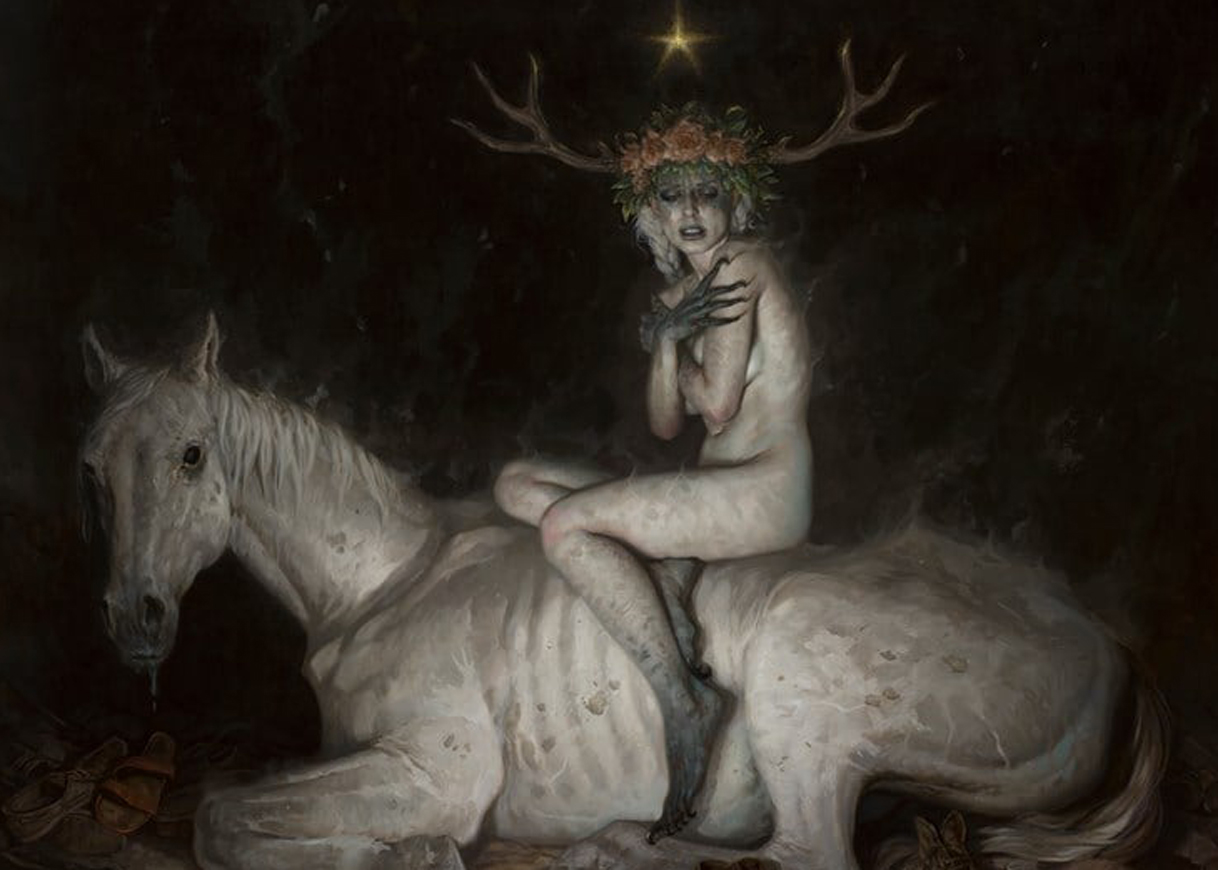
All art by Gerald Brom, https://www.bromart.com/

This image (cover art) is the award winning The Night Mare by the artist Gerald Brom. It reminded me of a local spirit of a lady in white who is said to haunt a country road nearby. Now, the interesting thing is that this road passes by a cillín, which is a graveyard for unbaptised babies and those deemed unworthy of a ‘proper’ church burial. These were also places where the unidentified, those who died of suicide, as well as those considered witches, pagans and those whose religion was unknown might be buried. Sometimes criminals, the mentally ill and oath-breakers were included.
These were very often places considered magical and the dwellings of fairies and ancestral spirits. They were liminal sites and, as is so often the case with these places, they were considered to be the boundaries between worlds. This is why fairy mounds, fairy trees and ring forts were chosen. For the Irish people, it was felt that it was better for the children to be looked after by the fairies than to spend eternity in hell or purgatory.

The belief that fairies might provide protection for an unbaptised baby might have also given comfort to the mother. Again, the associations between the fairy spirits and the spirits of past dead family members may account for this. So, it makes me wonder if this white lady is actually haunting the area or guarding it?
This piece by Neil Rushton is an excellent examination of not just the human dead lost within the fairy realms but of the mortality of fairies themselves. https://deadbutdreaming.wordpress.com/…/the-faeries…/?
We have a long history of ‘bright ladies’ appearing to children in European folklore, although post 10th century she tends to be associated with Marian apparitions and is usually benevolent. That said, the White Lady who appeared to children at Massabielle in France was said to have gestured to the children to follow her over the edge of a rocky cliff as she floated, orb-like, above them. Sites such as Fatima and Lourdes were also long associated with fairy women and bright ladies long before the apparitions were Christianised. There is also a strong link to caves, natural springs and trees held sacred in Pagan folklore, which we also find in Irish folklore.
The Ljósálfar (The Light Elves) were said to be as bright as the sun and to look upon them was almost impossible because of their shining nature. Just to add that many scholars see the distinction between light and dark elves as a Christian concept. Jacob Grimm wrote in his work, Teutonic Mythology, “The enchantment under which they suffer may be a symbol of the ban laid by Christianity on the divinities of the older faith.”

David Halpin
David Halpin is a writer from Tallaght, now living on the Carlow/ Wicklow border. He has been writing about Irish Forteana and spirituality for over thirty years and has had his articles published in magazines and books throughout the world. David’s photographs of Ireland’s sacred sites have been published in journals and articles worldwide and in 2020 were included in An Taisce’s annual report on the Irish landscape. David is also a reviewer of esoteric writing and as well as publishing for The Occult Book Review, he also contributes regularly to newspapers, magazines and online publications. His articles have appeared in The Wild Hunt, New Dawn Magazine, Coire Ansic, and he is a regular contributor to Ancient Origins. David also runs the blog, Circle Stories, where he focuses his writing upon the topics of consciousness and folklore.
Leave a Reply